Acknowledge the silence, skip the guilt
"We miss you" works. "We noticed you haven’t opened our last eight emails" does not — it reads as surveillance, and post-MPP it is often not even true.
Preview
What's inside
Read off the file itself, not a spec sheet. This is the module order the download actually ships with, in the order a reader meets them.
Import
The download is a single HTML file. Here is where it goes in Mailchimp, what the platform expects, and which tags are already wired up.
Plan Custom-coded templates are a paid-plan feature. Mailchimp’s free tier does not offer the code-your-own path.
Editing This is a Classic template. Every region marked mc:edit opens in the campaign builder as an editable region with a WYSIWYG toolbar, so a non-technical teammate can change copy and images without touching HTML. Classic and the Drag-and-Drop builder are not interchangeable — an imported HTML template always lands in Classic.
Watch for Do not paste this into the Drag-and-Drop builder. There is no path from custom HTML into a Drag-and-Drop template — importing as code-your-own always yields a Classic template, which is what the mc: regions are built for.
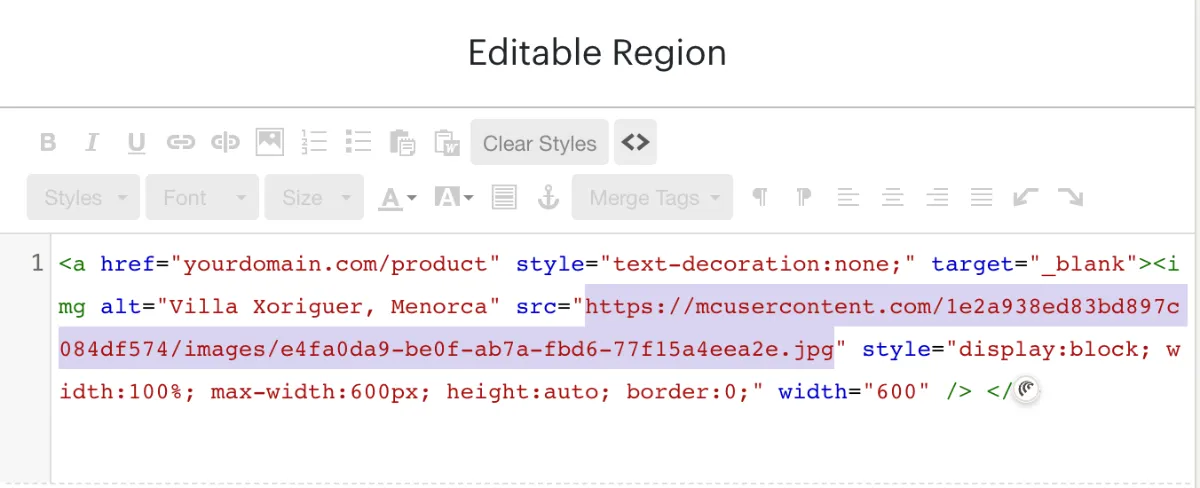
A custom-HTML template opens in Mailchimp’s legacy builder. Click the image, open the source view on that editable region, and replace the src with an image from your Mailchimp file manager — those URLs start with mcusercontent.com. The rest of the block can stay as it is.
Shortcut You can skip this entirely. Connect Mailchimp under Connectors in the studio and EmailTemple transfers the files over the API when it pushes the template, so there is no source code to edit. Connectors are on the Starter and Pro plans.
How to use it
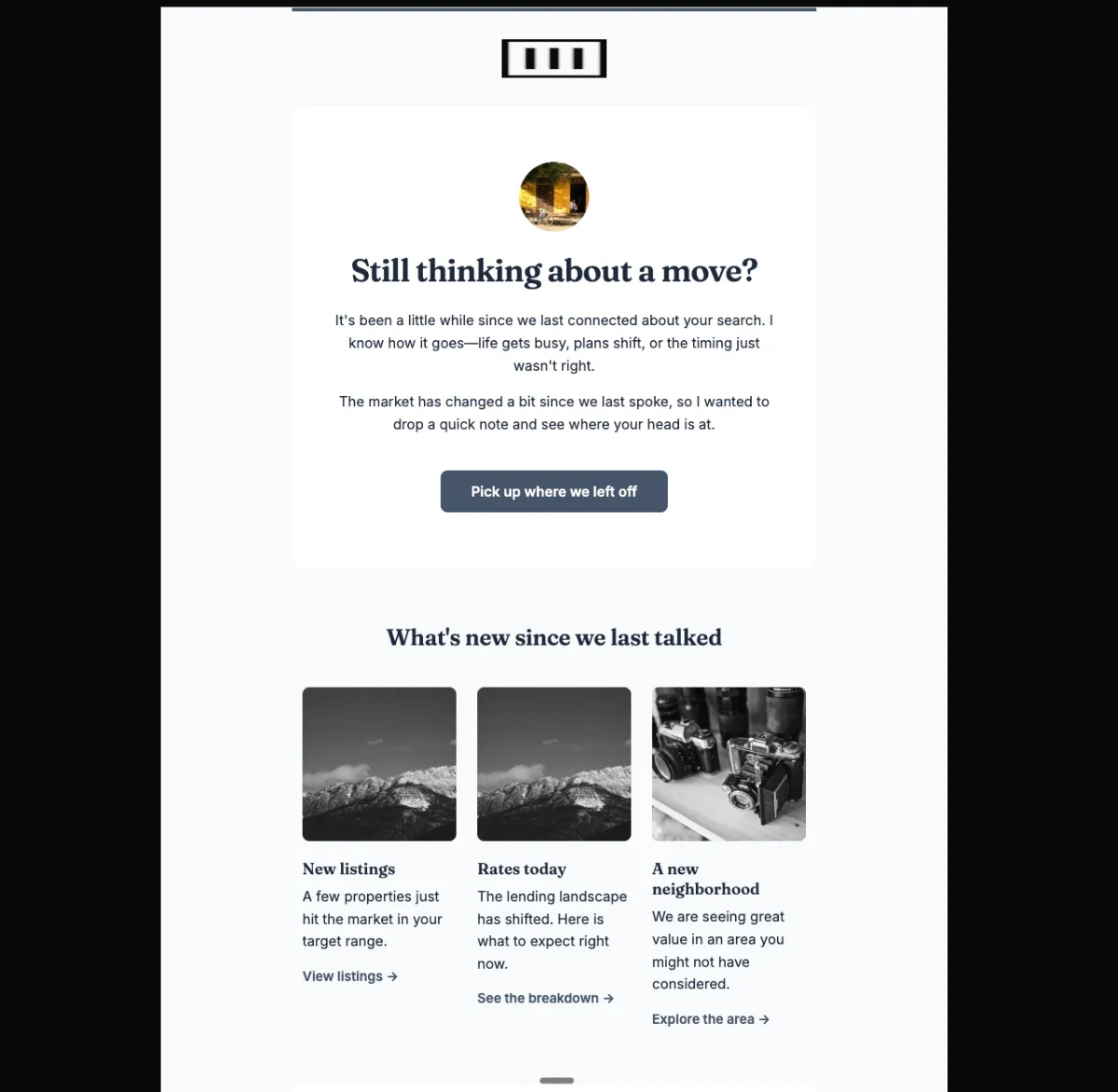
Run it against buyer leads who have gone quiet on their search for roughly six months or longer. Define quiet by clicks and replies, never by opens — Apple Mail Privacy Protection inflates open rates across the industry, so opens tell you almost nothing about interest. If someone does not answer this, take them off the list. Mailing the disengaged month after month is what gets a sender routed to spam.
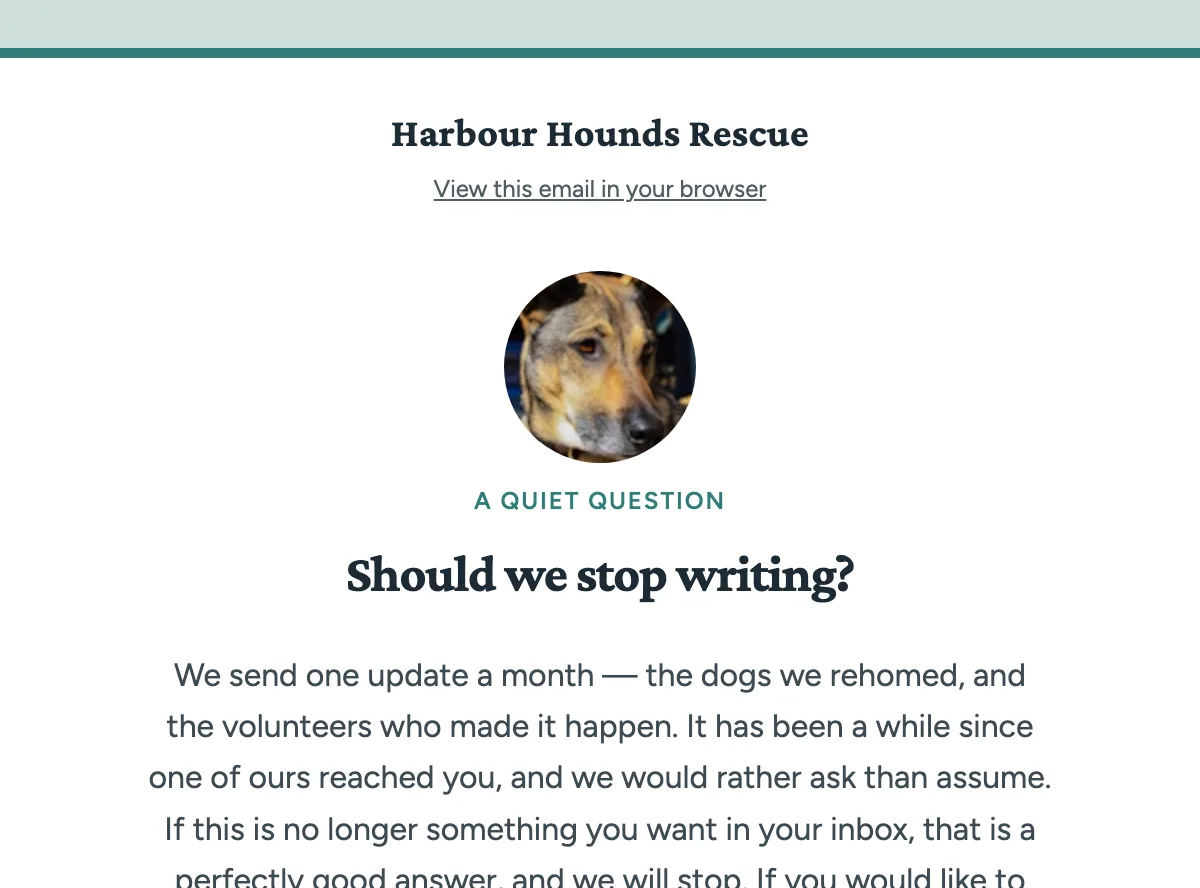
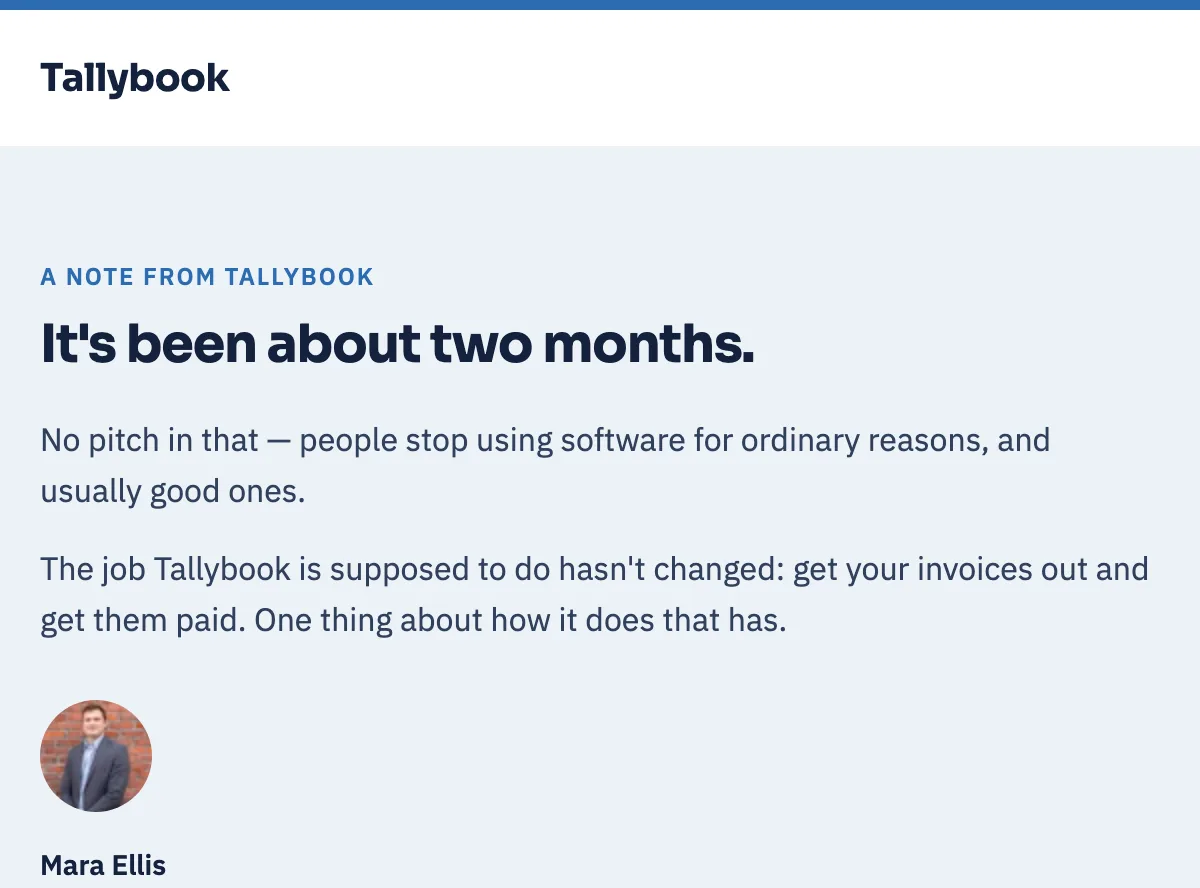
The round avatar is a grey placeholder and the note under it is written in first person, so a real headshot comes before anything else. Then rewrite the three cards under “What’s new since we last talked”: new listings in their actual price band, this week’s rate numbers and a neighbourhood you can speak to. Every link, including the “Pick up where we left off” button, points at emailtemple.com — repoint all four, and replace the footer’s business name and example New York address.
The craft
"We miss you" works. "We noticed you haven’t opened our last eight emails" does not — it reads as surveillance, and post-MPP it is often not even true.
A preferences arrow-link and a soft "or unsubscribe here" in the pre-footer. Respecting the reader’s choice is part of the voice, and a clean list is worth more than an inflated one.
Frequency should match engagement — send most often to the recently engaged, and to contacts dormant past six months only inside a campaign like this one. Repeatedly mailing the disengaged is what trains inbox providers to route you to spam.
Or refine this
Generate your own with this template as a starting point. Change the colors, the voice, the offer — describe what you want different and the studio recomposes it. Apply your brand kit and ship in your tone, not the template's.
The download is yours either way.
Open this template in the studio →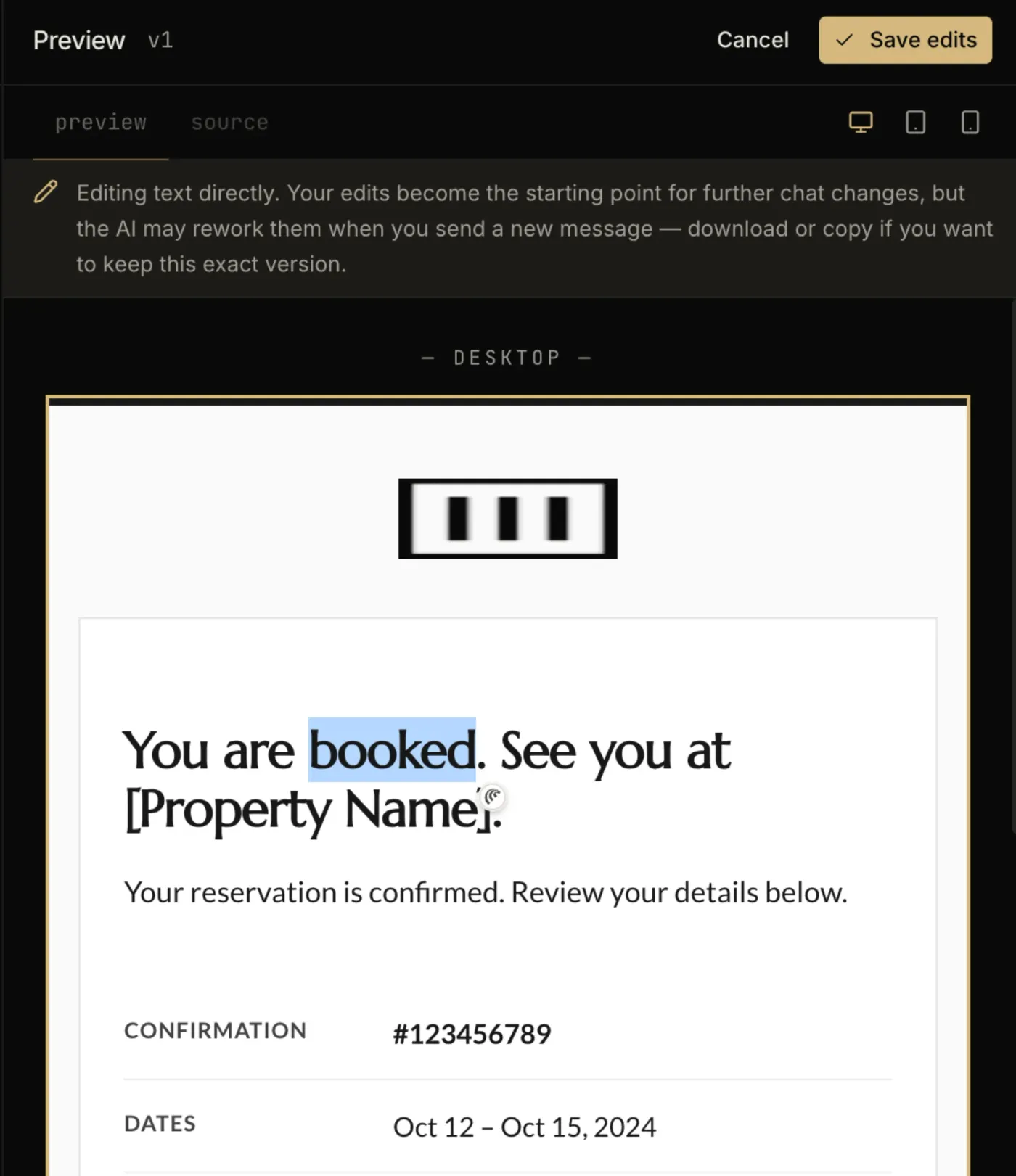
Questions
No. The code-your-own path is a paid-plan feature — Mailchimp’s free tier does not expose custom-coded templates. Everything else about this template is free and unrestricted.
Yes, for the regions marked editable. Each mc:edit region opens in the campaign builder with a WYSIWYG toolbar, so copy and images can change per send while the layout stays fixed.
Only if the reason they left was price. Give them a reason to stay or an easy exit — a reflexive discount teaches the engaged half of your list to wait for the next one.
Backgrounds are set with inline styles rather than the belt-and-braces bgcolor pairing, so check the render in a dark-mode client before your first send.
The “Pick up where we left off” button is a bulletproof VML button, so Outlook on Windows draws a real filled button instead of collapsing it to a bare text link.
The layout is a 600px table backbone with a mobile breakpoint, and the CSS is already inlined for the clients that strip style blocks.
In the studio
Describe what you want to send. Get a high-converting, dark-mode-safe template in seconds. Free tier, three generations a month, no card required.