Orient, do not sell
The structural rule is to tell a new subscriber where they have landed and what happens next. A pitch in the first email spends trust you have not earned yet.
Preview
What's inside
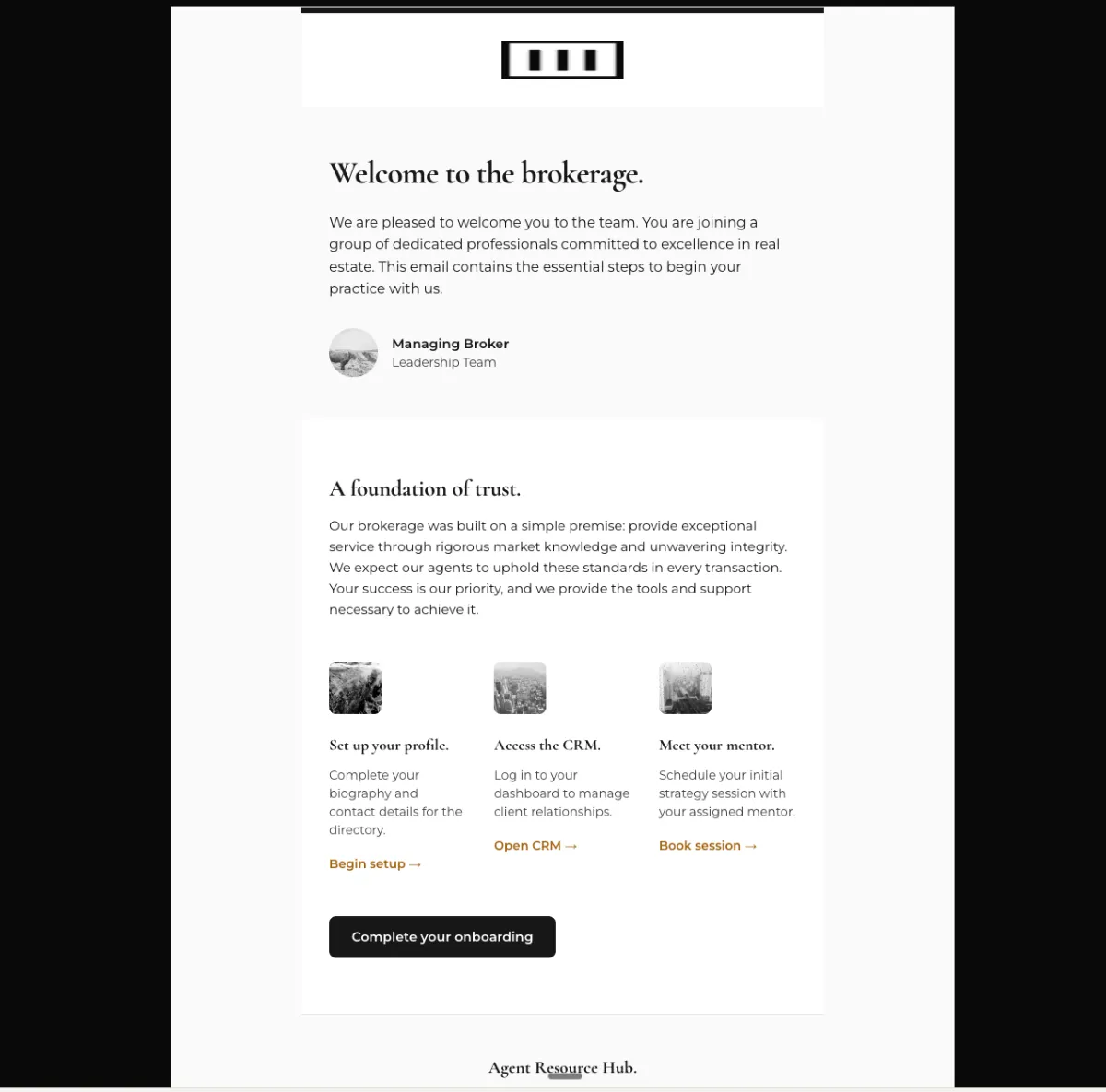
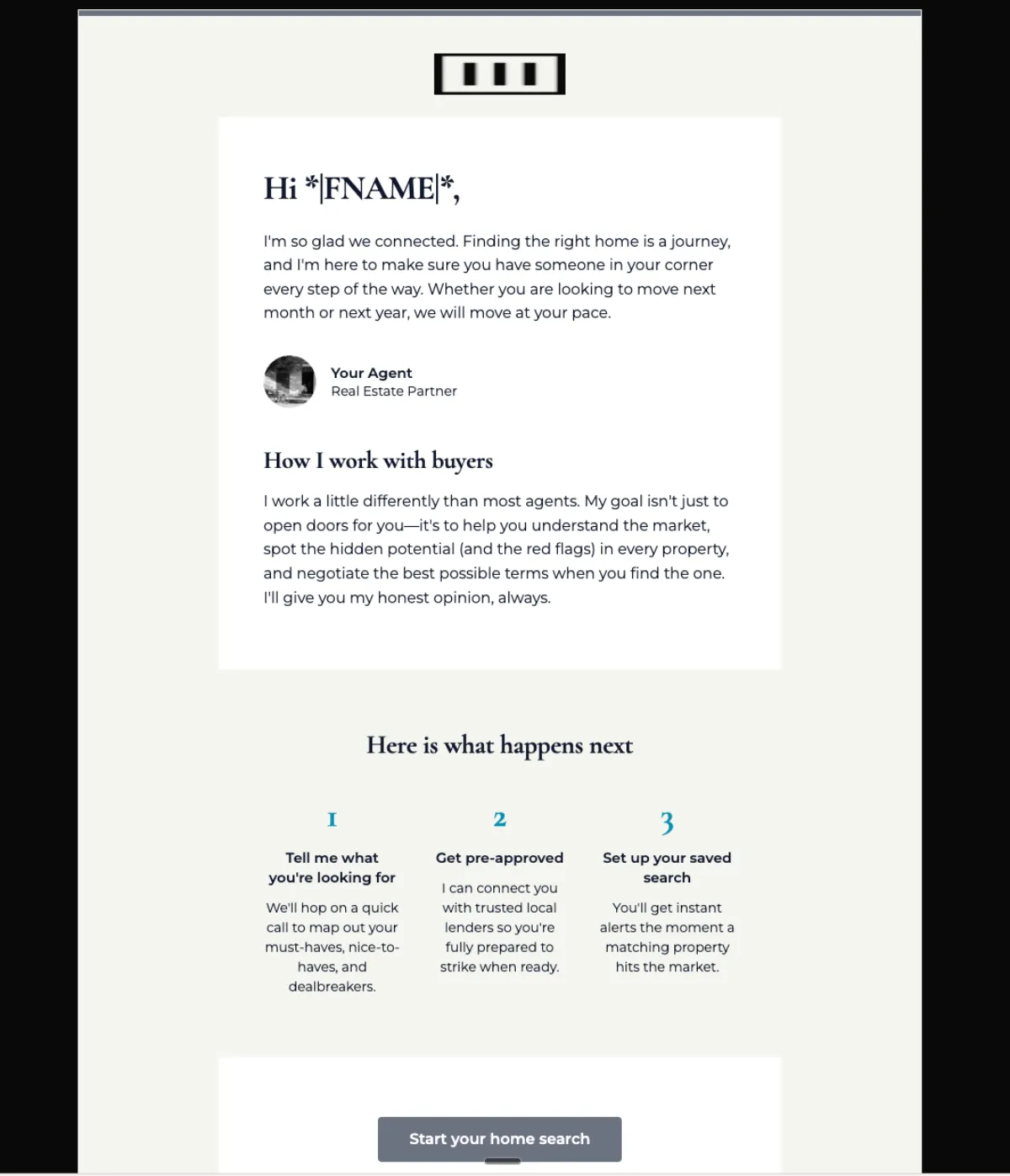
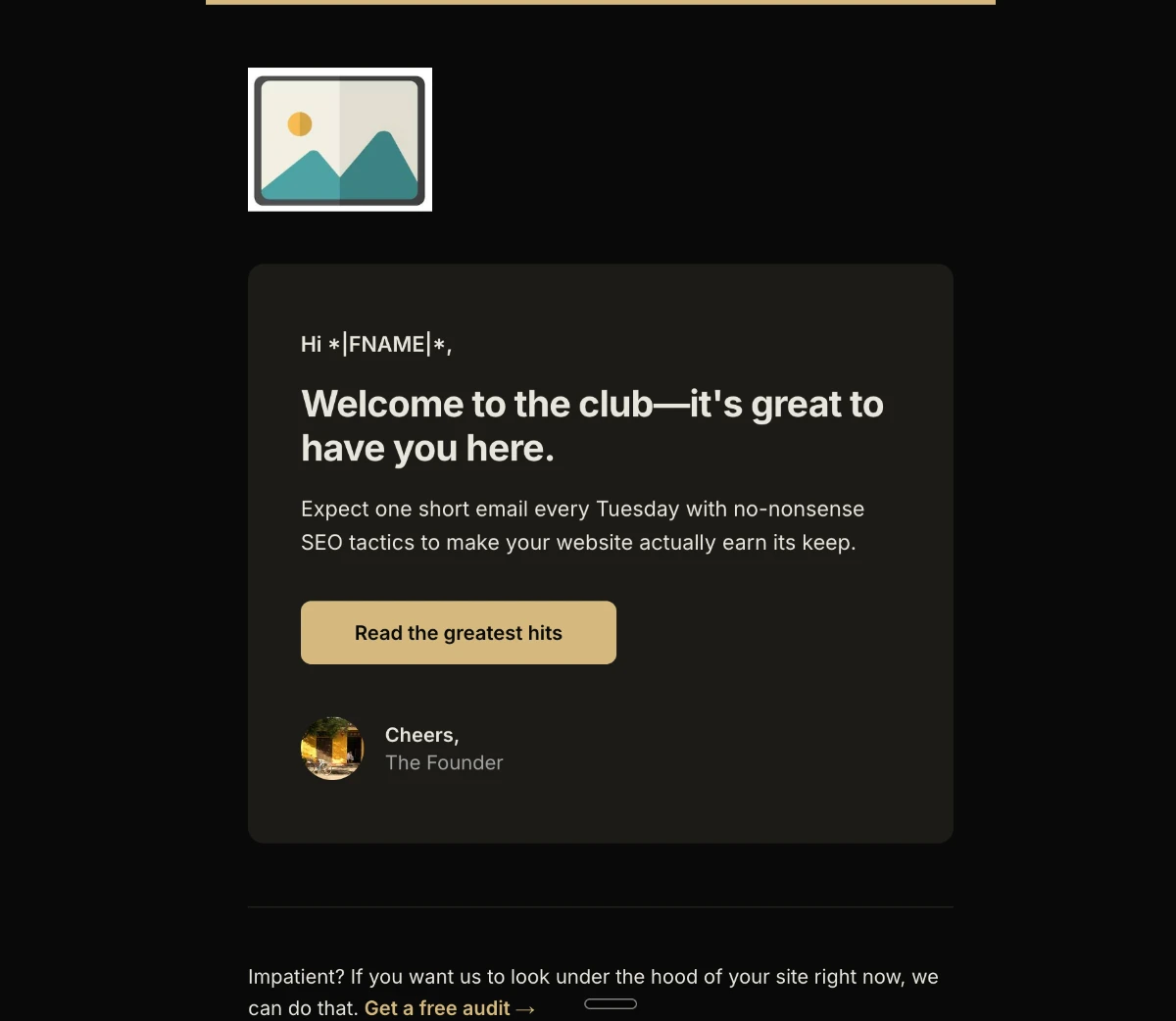
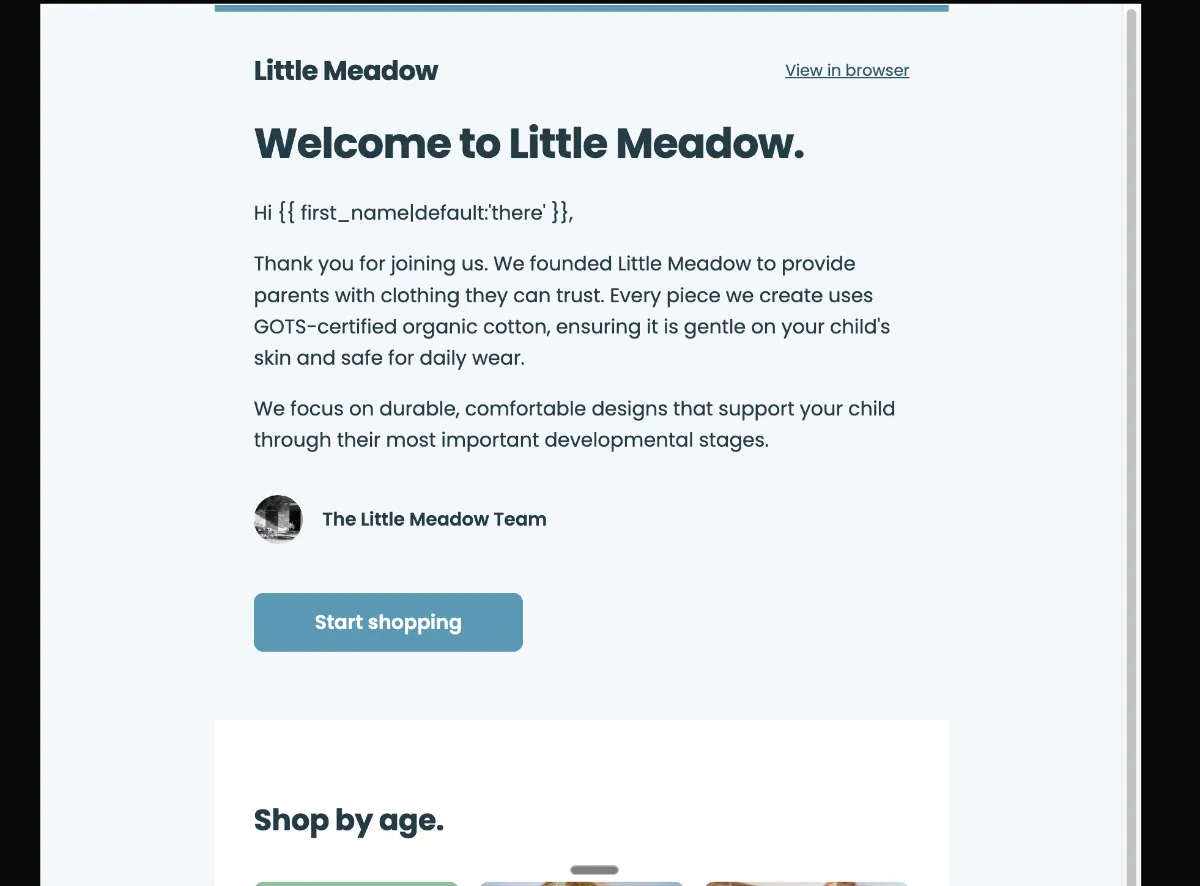
Read off the file itself, not a spec sheet. This is the module order the download actually ships with, in the order a reader meets them.
Import
The download is a single HTML file. Here is where it goes in Mailchimp, what the platform expects, and which tags are already wired up.
Plan Custom-coded templates are a paid-plan feature. Mailchimp’s free tier does not offer the code-your-own path.
Editing This is a Classic template. Every region marked mc:edit opens in the campaign builder as an editable region with a WYSIWYG toolbar, so a non-technical teammate can change copy and images without touching HTML. Classic and the Drag-and-Drop builder are not interchangeable — an imported HTML template always lands in Classic.
Watch for Do not paste this into the Drag-and-Drop builder. There is no path from custom HTML into a Drag-and-Drop template — importing as code-your-own always yields a Classic template, which is what the mc: regions are built for.
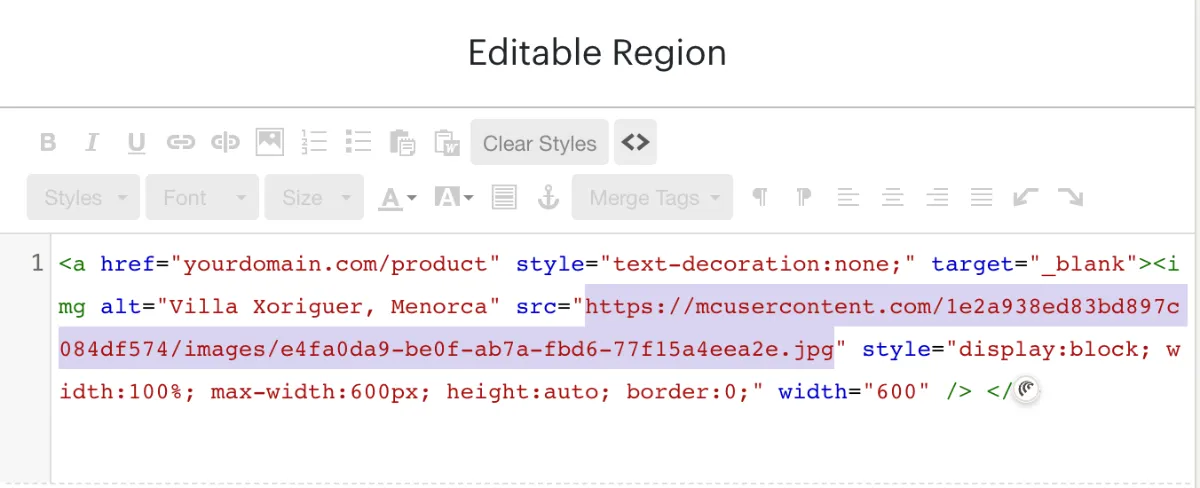
A custom-HTML template opens in Mailchimp’s legacy builder. Click the image, open the source view on that editable region, and replace the src with an image from your Mailchimp file manager — those URLs start with mcusercontent.com. The rest of the block can stay as it is.
Shortcut You can skip this entirely. Connect Mailchimp under Connectors in the studio and EmailTemple transfers the files over the API when it pushes the template, so there is no source code to edit. Connectors are on the Starter and Pro plans.
How to use it
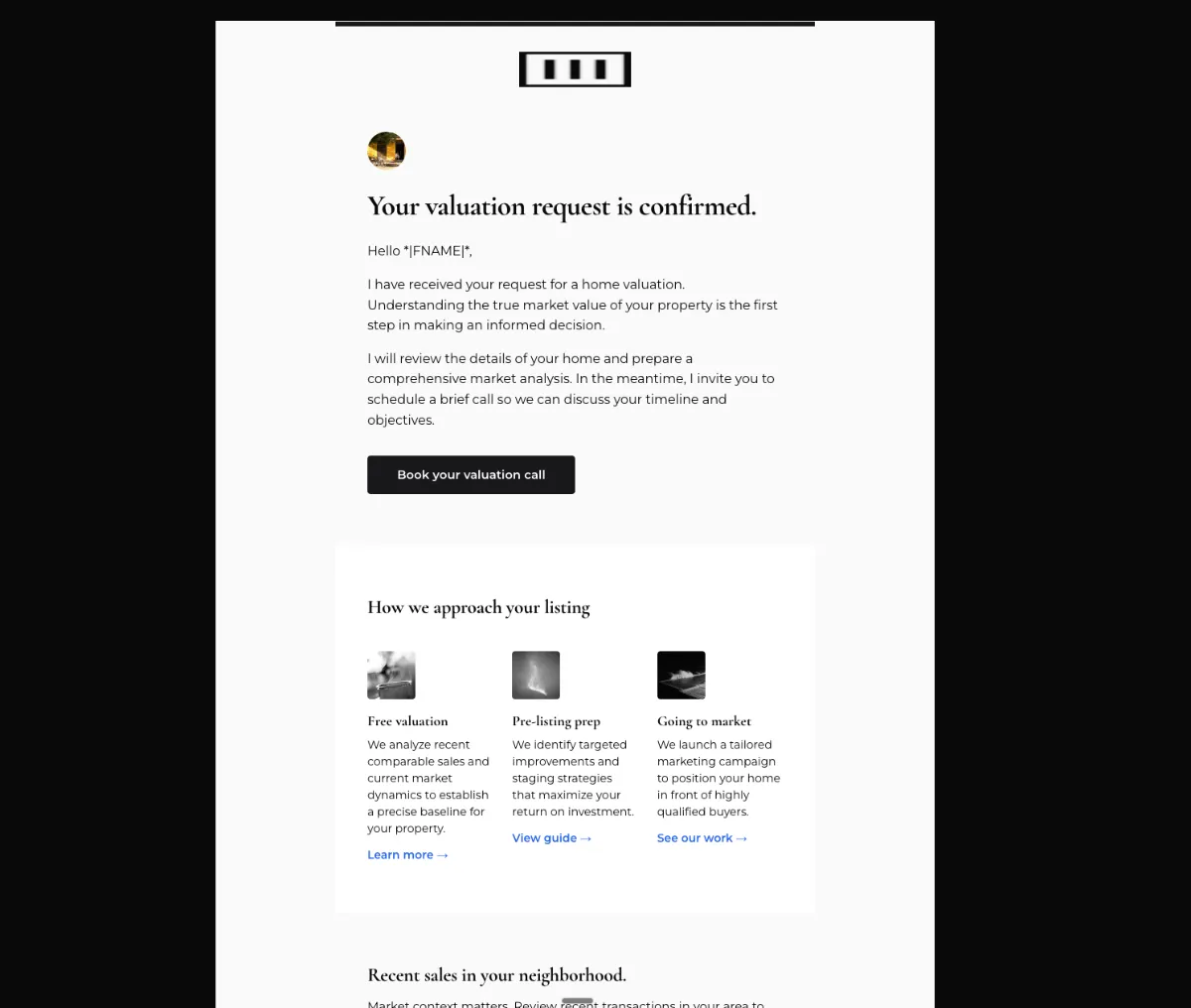
The first email of a seller automation, triggered the moment a valuation request comes in. It confirms receipt and buys you working time, which only holds if it arrives while the request is still fresh. Send it immediately. Nothing in the template sets that — the trigger lives in your Mailchimp automation — and there is no version of later that reads better than now.
The email makes a promise on your behalf: that you will review the home and prepare a comprehensive market analysis. Decide your turnaround, state it or cut the sentence. Then “Book your valuation call”. That button is the entire point of the send, so it has to land on a live calendar. The three process steps, free valuation, pre-listing prep and going to market, each carry an image slot and a link, and “Learn more”, “View guide” and “See our work” all point at placeholders. So does “View recent sales” in the pre-footer. The agent avatar at the top is a placeholder too.
The craft
The structural rule is to tell a new subscriber where they have landed and what happens next. A pitch in the first email spends trust you have not earned yet.
One primary button, no second. A welcome email with three competing actions has no action. Secondary paths belong in arrow-links, not buttons.
Warm and written, not corporate. A founder note and a small rounded avatar do more for trust here than any hero image, which is why the archetype skips large hero art entirely.
Or refine this
Generate your own with this template as a starting point. Change the colors, the voice, the offer — describe what you want different and the studio recomposes it. Apply your brand kit and ship in your tone, not the template's.
The download is yours either way.
Open this template in the studio →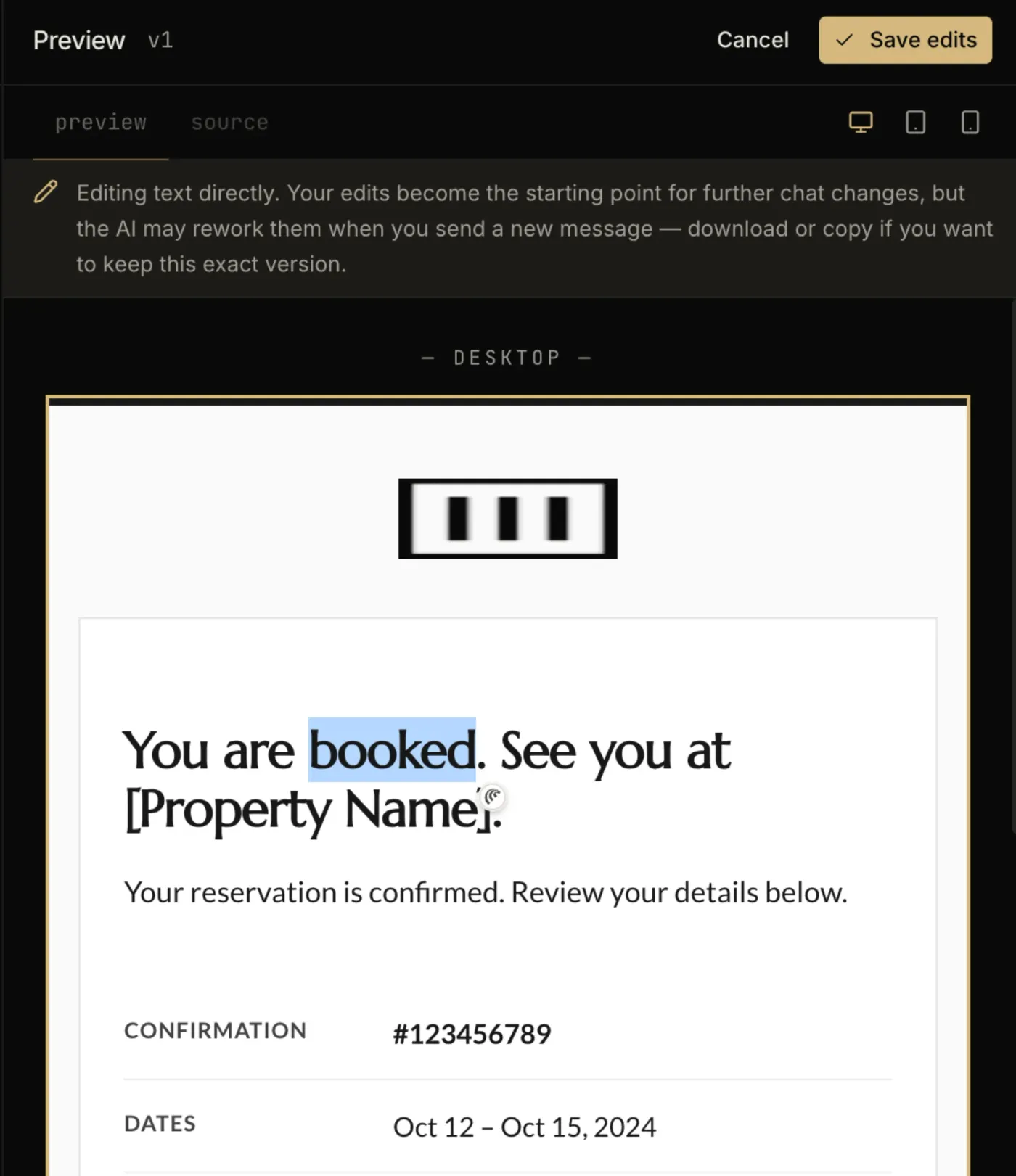
Questions
No. The code-your-own path is a paid-plan feature — Mailchimp’s free tier does not expose custom-coded templates. Everything else about this template is free and unrestricted.
Yes, for the regions marked editable. Each mc:edit region opens in the campaign builder with a WYSIWYG toolbar, so copy and images can change per send while the layout stays fixed.
Match the depth to how warm the audience is, not to a template. The documented range runs from a single activation email through to six or seven, and the constant across all of them is one action per email with a single clear CTA.
Backgrounds are set with inline styles rather than the belt-and-braces bgcolor pairing, so check the render in a dark-mode client before your first send.
The “Book your valuation call” button is a bulletproof VML button, so Outlook on Windows draws a real filled button instead of collapsing it to a bare text link.
The layout is a 600px table backbone with a mobile breakpoint, and the CSS is already inlined for the clients that strip style blocks.
In the studio
Describe what you want to send. Get a high-converting, dark-mode-safe template in seconds. Free tier, three generations a month, no card required.