If you are a small business operator with a list and you are not sending enough, the best welcome email subject lines matter more than most campaigns you will ever write. Welcome flows are often the highest-ROI emails in the account, and click-to-open rate can reach 20 to 30%, which means a weak or missing series leaves real money on the table.
Below, you will get 40+ subject lines grouped by use case, plus a 5-email series framework and a practical way to choose the right angle for your brand. The list is ordered by use case first — classic, value-first, SaaS or trial, e-commerce, newsletter, personality-driven and question-based — and then by the strongest, most-cited examples within each group. Most roundups stop at subject lines, but this one connects each subject line to the email behind it, which is what turns an open into a click. For a vertical-specific version, the new-lead intro in our real estate email templates shows the same welcome logic behind an agent’s first reply.
TL;DR: the best welcome email subject lines by use case
Best welcome email subject lines verdict: classic Welcome to [Brand] wins on safety, value-first (Welcome, here's your 10% off) wins on conversion, and personalized ([Name], welcome to [Brand]) wins on open rate.
- For first-purchase conversion (e-commerce):
Welcome! Here's 15% off your first order - For SaaS trial activation:
[Name], your free trial starts now, here's step one - For newsletter subscribers:
Welcome, here's the post 50,000+ readers loved most - For local service businesses:
Welcome to [Brand], here's what happens next - For brands with strong voice:
Best decision you made today
How we picked these welcome email subject lines
We used the same five criteria across every subject line in this list. The goal was not just more opens, but better opens that lead to clicks, trust and first-action conversion.

Open rate evidence
Welcome emails consistently outperform most other lifecycle sends on opens, which is why open rate had to be one of the filters. Benchmarks from providers like Omnisend and Campaign Monitor regularly place welcome emails around the 50 to 60% range, with stronger performers going higher, so lines that fit that pattern got priority in the list.
Click-through-to-open rate (CTOR) signal
CTOR matters more here because an opened welcome email that gets ignored does not move the business forward. Welcome flows can reach 20 to 30% CTOR, far above many other automations, so we favored subject lines that set up a clear next action and connect tightly to the content of the email. For the wider context around opens, clicks and revenue per send, the 2026 email marketing benchmarks cover where welcome flows fit against the rest of the program.
Length and mobile rendering
Short subject lines usually perform better, and data often points to 1 to 5 words as a strong range for opens. We also prioritized lines that place the critical words in the first 30 to 40 characters, because that is often what mobile inboxes show first and what determines whether the message earns the tap.
Personalization payoff
Personalization can lift opens when it feels natural and relevant, especially in welcome emails where the brand is introducing itself directly. Research often cited across email platforms puts first-name subject line lifts in roughly the 10 to 22% range, so personalized options were included where the line still sounded human and not assembled.
Match to the email behind it
A welcome subject line should describe the email that follows, not overpromise to win the open. If the line says there is a discount, a next step or a best resource inside, the email needs to deliver that immediately, and that standard is applied consistently across every entry in this roundup.
Welcome email subject lines comparison table
This table is a quick way to choose the right welcome email angle before you get into the full list. It compares the seven subject line categories by use case, example pattern, likely open behavior and the main risk if the email behind the subject does not follow through.

| Category | Best for | Example pattern | Open behavior | Main risk |
|---|---|---|---|---|
| Classic | Universal default, A/B baseline | Welcome to [Brand] | Safe, modest opens | Forgettable in crowded inbox |
| Value-first | Lead magnets, discount signups | Welcome — here’s your [resource] | Strong CTOR | Needs real value in the email |
| SaaS and trial | Activation-led products | Your trial starts now — do this first | Action-led opens | Falls flat if onboarding is slow |
| E-commerce | First-purchase conversion | Welcome! Here’s 15% off your first order | High opens, high clicks | Can train discount waiting |
| Newsletter and community | Editorial brands, communities | Welcome — read this first | Steady opens with social proof | Weak without a real archive |
| Personality-driven | Brands with a locked voice | Best decision you made today | Memorable, voice-led opens | Forced if voice is borrowed |
| Question-based | Curiosity hook, onboarding | Ready to get started? | Curiosity lift on specifics | Vague questions fall flat |
1. Classic welcome subject lines
Overview
Classic welcome subject lines confirm the subscription, set a warm tone and work across every industry.
Subject line examples
Welcome to [Brand]!Welcome, [Name] — we're glad you're hereYou're in! Welcome to [Brand]Welcome aboard, [Name]Thanks for joining — welcome to [Brand]Hello and welcome — let's get started[Name], welcome to the [Brand] family
Strengths
- Universally understood, with no extra explanation needed.
- Low risk for deliverability, tone and audience fit.
- Easy to use as the control variant in an A/B baseline test.
Weaknesses
- Forgettable in a crowded inbox, especially beside stronger offers.
- No curiosity hook if the brand needs more than a polite confirmation.
- Can waste a high-attention moment if the email includes a discount or next step.
Who it’s for
Classic welcome lines fit brands that do not have a strong voice yet, or brands that want a safe first send before testing sharper angles. They also work well as the control against which you compare more specific value-led or personality-led variants.
2. Value-first welcome subject lines
Overview
Value-first subject lines deliver what the subscriber signed up for, in the subject line itself.
Subject line examples
Welcome — here's your [free guide]Your [resource] is ready — welcome!Welcome + your 10% off code[Name], your account is ready — start hereYou asked for it — your [resource] is insideWelcome! Here are the [X] things you should knowWelcome, [Name] — here's the good stuff
Strengths
- Delivers on the signup promise immediately, which builds trust fast.
- Gives the subscriber a concrete reason to open and click.
- Works especially well when the first email has a clear asset, code or next step inside.
Weaknesses
- Requires real value in the email, not a vague placeholder.
- Can pull in discount-only buyers if the offer is the only thing doing the work.
Who it’s for
Value-first lines fit any brand using a lead magnet, discount, onboarding resource or signup incentive. They also work well when the first email is built around a single promised asset, because the welcome sequence starts with a clean handoff from signup to delivery.
3. SaaS and trial welcome subject lines
Overview
SaaS welcome subject lines point users to the first action that proves product value.
Subject line examples
Welcome to [Product] — let's get you set upYour [Product] account is live — start here[Name], your free trial starts now — do this firstWelcome! 3 steps to your first win in [Product]Your [Product] setup takes 2 minutesWelcome to [Product] — your quick-start guide[Name], your dashboard is waiting
Strengths
- Focuses the email on activation, not a feature dump.
- Reduces cognitive load by giving the user one clear starting point.
- Supports trial-to-paid conversion when the first action maps to product value.
Weaknesses
- Requires a genuinely clear single next action in the email.
- Falls flat if the onboarding flow behind the subject line is slow or confusing.
Who it’s for
These lines fit SaaS products, apps and free trials where activation is the step that leads to revenue. They work best when the first email sends the user straight into setup, first use or a guided quick win.
4. E-commerce welcome subject lines
Overview
E-commerce welcome subject lines balance warmth with a clear first-purchase incentive.
Subject line examples
Welcome! Here's 15% off your first orderWelcome + 10% off — your first order awaits[Name], your first 15% off code is insideWelcome to [Store] — your VIP treatment starts nowNew here? Here's 15% off to get you startedWelcome! Use code WELCOME15 at checkoutYou're going to love shopping here — offer inside
Strengths
- Drives the first purchase while attention is highest.
- Helps offset acquisition cost by moving new subscribers toward revenue faster.
- Easy to A/B test by changing discount framing, code placement or percentage.
Weaknesses
- Ten to fifteen percent is common, but going higher can attract discount-only shoppers.
- Requires enough margin to fund the offer without hurting the first order.
- Can train customers to wait for codes if discounting becomes the default welcome move.
Who it’s for
These lines fit DTC and e-commerce brands that have enough margin to support a first-order incentive. They work best when the discount is real, the checkout path is simple and the email behind the subject makes the offer impossible to miss.
5. Newsletter and community welcome subject lines
Overview
Newsletter welcome subject lines validate the subscriber’s choice and lead with the best content.
Subject line examples
Welcome to [Newsletter] — here's what to expectYou're subscribed! Start with our most-read postWelcome to [Community] — say hello[Name], you're in — here's what 50,000+ readers loveWelcome! Here's our top 5 articles to startWelcome to [Newsletter] — a taste of what's comingYou joined [Newsletter] — read this first
Strengths
- Uses social proof well when the publication already has readership momentum.
- Sets expectations for format, cadence and the kind of content to expect.
- Drives traffic to the best existing posts instead of leaving the first click to chance.
Weaknesses
- Works better when there is a real back catalogue worth sending people into.
- Social proof lines only land if the audience size or readership claim is credible.
Who it’s for
These lines fit newsletters, editorial brands, communities, blogs and media products. They work best when the first email introduces the format clearly and points the subscriber to a strong piece of content instead of a generic hello.
6. Personality-driven welcome subject lines
Overview
Personality-driven subject lines work for brands whose audience already expects a distinctive voice.
Subject line examples
Best decision you made todayWelcome to the club — we've been expecting youWell, hello thereYou just made our dayFinally! We've been waiting for you, [Name]This was a good decisionWelcome to the flock
Strengths
- More memorable than generic welcome lines.
- Builds the brand from the first send, not just the landing page.
- Can stand out in crowded inboxes when the tone feels unmistakably yours.
Weaknesses
- Only works if the rest of the brand actually sounds like this.
- Can feel forced fast if the voice is borrowed or overperformed.
- Has narrower appeal than a neutral welcome line, especially across mixed audiences.
Who it’s for
These lines fit brands with a locked voice that customers already recognize across site copy, product and email. If the brand personality is still being figured out, this is usually better as a later test than as the default first impression.
7. Question-based welcome subject lines
Overview
Question-based subject lines open a curiosity gap that can lift opens by around 10% (Yesware).
Subject line examples
Ready to get started?New to [Brand]? Start hereDid you say [signup topic]?Want 15% off your first order?Ready to [desired outcome]?Wondering how [Brand] works?Vanilla or chocolate?
Strengths
- Creates a curiosity hook that can lift opens when the question is specific.
- Adds a conversational tone without needing a heavy brand voice.
- Gives you a clean testing angle against direct statement-based subject lines.
Weaknesses
- Generic questions like
How are you?usually fall flat because they give the reader nothing. - The question has to connect tightly to the email body, or the open feels wasted.
Who it’s for
These lines fit brands testing curiosity-led welcome emails or brands with a strong onboarding hook to point at straight away. They work best when the question previews a clear answer, offer or first action inside the email.
The 5-email welcome series behind a great subject line
A subject line only earns its open if the email beneath it delivers on what was promised. Welcome click-to-open rates in the 20 to 30 percent range are much more realistic when you build a real sequence, not a single welcome send that tries to do everything at once.
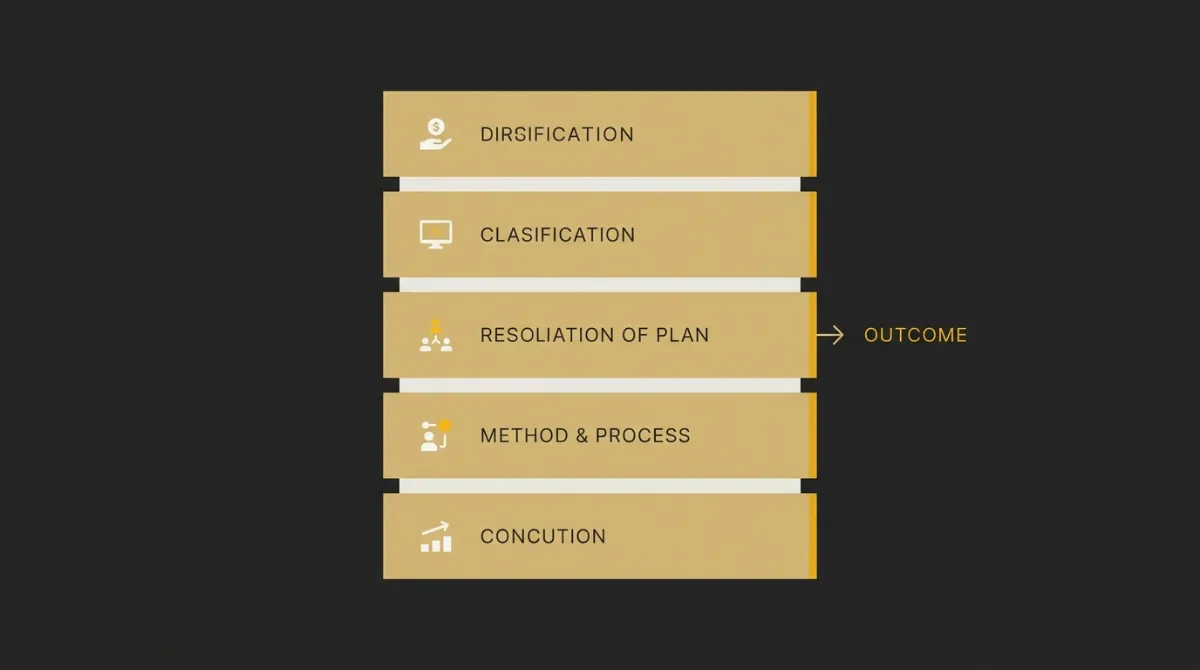
The offer, the audience and the action should be clear in every email. The container is the message too, because even the best subject line dies if the email below it renders badly in dark mode or looks like every other default template. This is Flow 1 in the three-flow system for solopreneurs — welcome, evergreen sales and re-engagement — and it is the one most accounts under-build.
Email 1: deliver the promise
Start by handing over the lead magnet, discount or promised resource immediately, with no throat-clearing. A paired subject line like Welcome — here's your [resource] works because the body does exactly what the line says it will do, then ends with one clear CTA.
Email 2: set expectations and introduce the voice
Use the second email to explain cadence, introduce the founder or sender voice and point to one useful resource. A subject line like Quick hello from [Name] at [Brand] works when the email tells people when they will hear from you, what kind of emails to expect and why they should keep opening them.
Email 3: share your best content or product
Do not send a roundup here. Send the single best post, product or page for a new subscriber and make the reason for choosing it obvious. A subject line like The one [post/product] you should see first keeps the email focused and makes the next click easier.
Email 4: add social proof
Now show that other people trust you and got a result, whether that is a customer story, testimonial, review or short case study. A subject line like How [customer] got [outcome] works because it shifts the series from brand claims to proof the reader can picture for themselves.
Email 5: ask for the next step
The fifth email should ask for one next action only, such as booking a call, starting a trial or making a first purchase. A subject line like Ready for [outcome]? works when the body removes friction, makes the step feel obvious and avoids splitting attention with a second CTA.
How to choose the right welcome email subject line
The right subject line depends on what they signed up for, what device they read on and what you can actually deliver.

Match the subject line to the signup source
A pricing-page subscriber and a blog subscriber should not get the same first email. Segment from day one, then write the subject line around the intent that brought them onto your list, because someone who asked for a discount wants a different first step from someone who asked for advice.
Lead with the value, not the greeting
Here's your 15% off usually does more work than Welcome to [Brand] because it tells the reader what they get before asking for attention. This is especially true when the email has one clear asset, code or resource and the subject line mirrors that value directly.
Keep critical words in the first 30 characters
Most opens happen on phones, and long subject lines get cut off fast. Put the key value, product or promise early, so the part that survives truncation still makes sense and still gives the reader a reason to open.
Test personalization before assuming it works
First-name personalization can lift opens on some lists, but it is not universal. Test it on your own audience before treating it as a default, because some segments respond well to a named subject line while others ignore it or find it overly familiar.
A/B test the variable, not the whole subject line
Change one thing at a time, then measure what changed. Test name on versus name off, value-first versus greeting-first, or emoji on versus emoji off, but do not rewrite the entire line in both versions or you will not know what caused the result.
The welcome is only half of the lifecycle. Once subscribers go quiet, the re-engagement email subject lines playbook handles the other end — when to win them back, when to delete and how to sequence the sends.
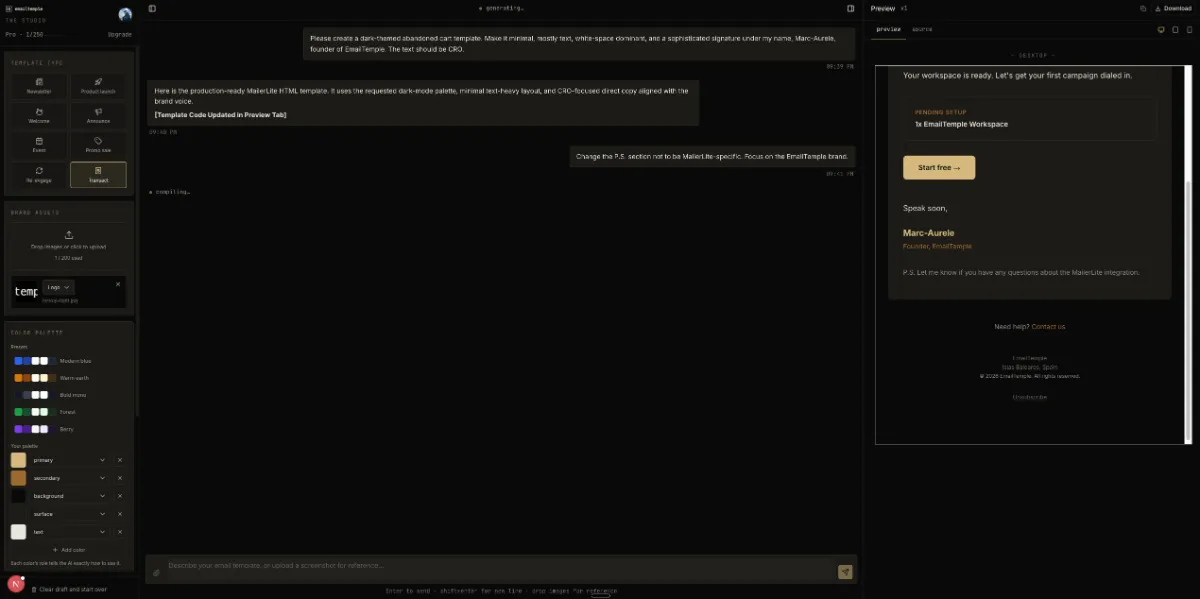
Once the subject line is doing its job, the next bottleneck is usually the template the email lives in. If your welcome sequence still looks like a default ESP layout, the open does not become a click — so generate your own production-ready welcome template in the EmailTemple studio for free.
If you send from Mailchimp, the Free welcome email template for Mailchimp gives you a dark-mode safe layout for Email 1 that you can download and fill with your own offer.
Frequently asked questions
What is the best welcome email subject line?
The best welcome email subject line depends on what the subscriber signed up for and what the first email actually delivers. In most cases, value-first lines tend to win on click-to-open rate, classic welcome lines are the safest default and personalized lines can help opens when they fit the audience.
How long should a welcome email subject line be?
Shorter is usually better. Very short subject lines, often in the 1 to 5 word range, can perform well, but the more practical rule is to keep the important words in the first 30 characters so mobile readers still see the value before the line gets cut off.
Should I include the subscriber’s name in the subject line?
Sometimes, yes, but it should be tested rather than assumed. First-name personalization can lift opens on average, yet not every list responds the same way, and some audiences prefer a cleaner, more direct line without personal details.
Are emojis worth using in welcome email subject lines?
They can be, if they match the brand voice and are used sparingly. Some brands do see higher unique opens with emojis, but one emoji is usually the ceiling, and a plain subject line is often the better choice for more restrained brands.
What open rate should I expect from a welcome email?
Welcome emails usually outperform regular campaigns by a wide margin. A reasonable benchmark is around 50 to 60 percent for welcome sends, compared with roughly 20 to 25 percent for standard ongoing emails, though your list quality and offer still matter.
How soon should the welcome email send after signup?
It should send within minutes of signup. The highest-attention window is right after someone joins your list, so delays reduce the chance that the subscriber still remembers the context, the offer or why they signed up in the first place.
Should the welcome email be one email or a series?
A series usually works better than a single email because each send can do one job well. A 5-email welcome sequence gives you room to deliver the promise, set expectations, share the best resource, add proof and ask for the next step without cramming everything into one message.