Most solopreneurs have a list and an offer, but email marketing for solopreneurs still gets treated like a chore instead of a system. That means quiet revenue leaks every week, not because the offer is weak, but because the channel gets handled last.
This guide covers the revenue math, the three flows to set up first, sender setup, list-building and the DIY vs hire decision. You should leave with a practical system you can run without making email your full-time job. A lot of that speed comes from AI now, if you know how to use AI for email marketing without the generic output.
What Email Actually Drives (TL;DR)
Email is usually the highest-ROI channel a solopreneur owns, but only when it runs like a system instead of a once-in-a-while task. If the inbox placement is sound, the core flows are live and the emails look worth opening, the channel can earn its keep every month.
The revenue math at a glance
- Healthy solo lists often produce $1 to $5 revenue per subscriber per month.
- A solid benchmark for open rate is 30% to 45%.
- A solid benchmark for click rate is 3% to 7%.
- Those numbers matter together, not alone, because opens without clicks do not turn into revenue.
The 3 things that decide whether email pays
- Sender setup that lands in inbox: If your domain and authentication are weak, the rest of the system does not matter much.
- Three evergreen flows that sell on autopilot: A welcome flow, a nurture sequence and a simple offer or reactivation flow do more work than irregular broadcasts. Those same three flows can be written as one on-brand arc with a sequence builder that exports to your ESP.
- A template that does not look like every other small business: The offer matters, but the container still affects opens, clicks and trust.
Why Email Still Beats Social for Solopreneurs
You own the list, you rent the followers
An email list is an owned asset. A social following sits on a platform that can cut your reach with one algorithm change, one policy tweak or one account issue.
That is the core difference. Email compounds because you can keep sending to the same audience, while social often forces you to re-earn attention every week.
What the per-subscriber math looks like
For a healthy solo list, a realistic benchmark is about $1 to $5 in revenue per subscriber per month. On a 2,000-person list, that is roughly $2,000 to $10,000 per month if the offer, list quality and sending system are working.
That range is not automatic. It depends on consistent sending, decent inbox placement and emails that get opened and clicked.
When email is the wrong channel
If you have no list and no offer, email is not the first move. A clear landing page and an audience-building motion usually come first, because there is nothing to send and no one to send to yet.
In that case, social, SEO, partnerships or lead magnets may be the better starting point. Email becomes the multiplier after you have something worth subscribing for.
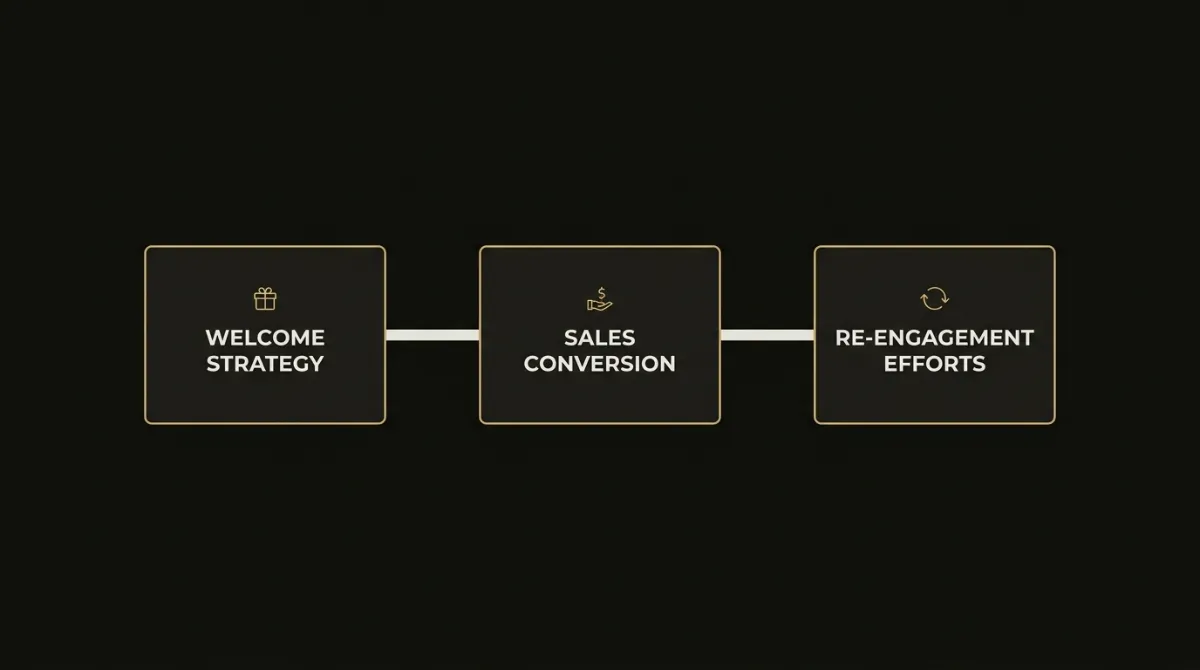
The 3 Email Flows That Pay for Everything
These three flows do most of the revenue work for a solopreneur. If these are live, you have the core of an email system instead of a newsletter habit.
Flow 1: Welcome sequence (subscriber to fan)
The welcome sequence sets the tone for everything that follows. It is where trust starts, expectations get set and the reader learns why staying on your list is worth it. For the subject-line layer that decides whether each email in the sequence gets opened at all, see welcome email subject lines — 40+ angles grouped by use case.
Flow 2: Evergreen sales sequence (fan to buyer)
This flow does the selling work that most solopreneurs leave to occasional broadcasts. It keeps the offer in motion after the welcome sequence ends, especially for subscribers who are interested but not ready on day one.
Flow 3: Re-engagement (silent list to clean list)
Re-engagement protects list quality. It can recover attention from quiet subscribers, but just as important, it helps you stop sending to people who are no longer interested. The subject line is what decides whether this flow works at all — see re-engagement email subject lines for the 40+ angles to test before you cut.
Klaviyo, Mailchimp and the Quiet Revenue Leak
Most solo accounts in Klaviyo, Mailchimp, MailerLite or Kit are not broken. They are quietly leaking, which is worse, because the account looks fine on the surface while money slips out through weak flows, tired lists and default templates.
The pattern is usually the same: contacts exist, forms exist, maybe a few campaigns went out, but the system stops short of the parts that actually convert. In some accounts, the list size also looks healthier than the real sendable audience because stored profiles, suppressed contacts and inactive subscribers get mentally counted as reachable people.

What ‘leaking revenue’ actually looks like
A revenue leak is not one dramatic failure. It is a welcome flow that stops after two emails, a checkout reminder that was never switched on, a broadcast list full of people who have not opened in months or a default ESP layout that looks like mass mail before the offer even loads.
The 4 leaks to check this week
- Welcome flow ends after 2 emails: Check your automation builder and count the actual sends, not the draft ideas. If the sequence stops before trust, education and the offer are covered, new subscribers cool off before they are ever asked to buy.
- Abandoned-checkout flow is off or looks unbranded: Check whether the trigger is active, whether it fires on the right event and whether the email matches your site and offer. This leak matters because these subscribers were already close to buying, which makes every missing or weak reminder expensive.
- Broadcast list never gets cleaned: Check who has not opened or clicked in a long stretch, then compare total contacts against active sendable contacts. A stale list drags down deliverability, which means future campaigns reach fewer real people even when the offer is good.
- Default ESP template signals mass mail: Check your last few sends on desktop, mobile and dark mode, then ask whether they look like your business or like a stock layout. The revenue hit is usually upstream — lower opens, less trust and fewer clicks before the reader even reaches the pitch.
List-Building Basics for Solopreneurs
Start with one lead magnet that solves one problem
One specific problem for one specific person usually outperforms a vague free guide. The subscriber should know exactly what they get and why it matters before they type an email address.
For example, a creator might offer a weekly content planner, a service provider might offer a client onboarding checklist and an ecom brand might offer a product selection quiz or first-order guide. Keep it close to the offer you eventually want to sell.
Where to place opt-ins that actually convert
Put opt-ins where existing attention already lands. For most solopreneurs, that means the top and bottom of the homepage, every blog post, an exit-intent popup and one dedicated landing page you can link anywhere.
This works because the signup ask appears in context, not as an afterthought. Skip social-only signup paths if you can, because borrowed attention is a weak place to build a dependable list.
Single vs double opt-in
Double opt-in is usually the better call if you want a cleaner list and stronger deliverability. You will likely end up with a slightly smaller list, but the people who confirm are more likely to open, click and keep future campaigns healthy.
Single opt-in can grow the list faster. The trade-off is more junk addresses, lower engagement and more cleanup later.
Sender Setup: Domains, Authentication and Looking Like a Real Brand
Send from a custom domain, not Gmail
Send from name@yourdomain.com, not name@gmail.com. A custom domain gives mailbox providers a clearer trust signal, and it tells the reader this is a real business, not a side inbox sending mass mail.
This matters for both deliverability and trust. Even a strong offer looks less credible when it lands from a free personal address.
SPF, DKIM, DMARC in plain English
SPF tells inbox providers which servers are allowed to send email for your domain. DKIM adds a signature that helps prove the message was not altered on the way.
DMARC tells providers what to do when a message fails those checks, and gives you a way to monitor abuse. Every major ESP has setup docs for SPF, DKIM and DMARC, so this is usually a copy-and-paste DNS job, not a custom engineering project. Passing all three is the floor, not the finish line — improving email deliverability is mostly what you do after that.
Generating your first branded template
This is the step most solopreneurs skip. The default templates inside Mailchimp, ActiveCampaign, MailerLite and similar ESPs tend to make different businesses look strangely alike, which means the email can feel like a mass-mail blast before the reader even reaches the offer. If you are already shopping for something better, the 6 best Stripo alternatives breaks down the trade-offs by workflow, price and ESP export coverage.
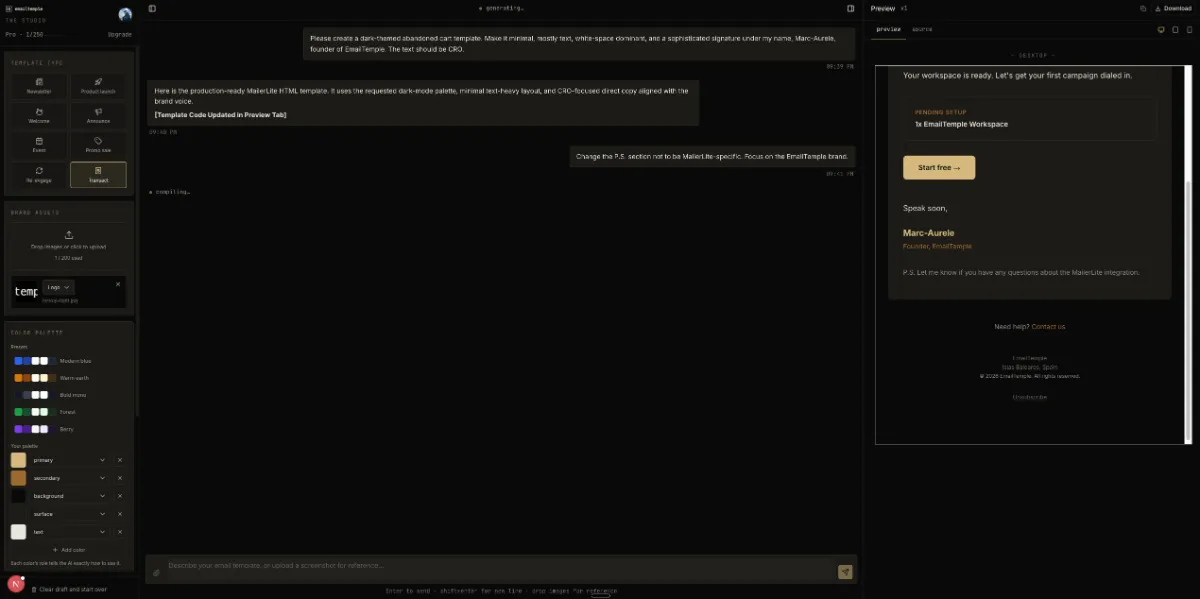
A branded template fixes that gap. One practical way to handle it is to describe what you want to send, then use a studio like EmailTemple to return a production-ready template that is dark-mode safe and exported to Mailchimp, ActiveCampaign or MailerLite in seconds, instead of hiring a designer or wrestling with a drag-and-drop builder.
Dark-mode and mobile rendering
A real share of opens now happen in dark mode, especially in Apple Mail and Gmail on iPhone. If the logo disappears, text flips badly or buttons lose contrast, the email looks broken even when the copy is good.
Test every template on mobile and in dark mode before sending. That check catches a lot of trust-killing problems early, and those problems are often invisible in the ESP preview alone.
How Often to Send (And What to Send)
The 80/20 rule: value vs offer
A useful default is four value emails for every one offer email. If you only show up during launches, you train the list to expect a pitch every time your name appears in the inbox.
That pattern lowers opens over time. Regular value sends keep attention warm, so the occasional sales email does not feel like an interruption.
Realistic cadence for a solo operator
Weekly is the sweet spot for most solo operators. Bi-weekly is usually the floor, because anything less starts to make the list forget who you are.
Daily can work, but mostly for newsletter-first businesses where the email itself is the product. For everyone else, consistency matters more than volume. If you want the cadence mapped by list size and business type, see the email marketing frequency best practices.
What to write when you have nothing to sell
Send something useful anyway. A lesson, a short story, a useful link round-up or a behind-the-scenes note is enough to keep the relationship alive.
Lists usually go cold from silence faster than from sending. If you are unsure what to write, start with one thing you learned this week that would save the reader time or a mistake.
Picking an ESP: The 3 Categories That Matter
Most solopreneurs do not need a 19-tool comparison. They need to pick the category that matches how the business sells, then choose a tool inside that lane.
The biggest mistake is buying for features you will never use. If your business runs on products, paid subscriptions or audience building, the right ESP category becomes clearer fast. For a side-by-side ranking of the main small-business options, see our guide to the best email service provider.

| Category | Best for | Example tools | Pricing model | Watch out for |
|---|---|---|---|---|
| Creator-first | Audience building, digital products | Kit, Beehiiv | Free tier, per-subscriber | Limited e-commerce automation |
| E-commerce-first | Sales flows, abandoned cart | Klaviyo, Mailchimp, Brevo | Per-subscriber or per-send | Gets expensive at scale |
| Newsletter-first | Paid subs, referrals, monetization | Beehiiv, Substack, Buttondown | Flat or free plus paid features | Weak product-sale automation |
When to DIY and When to Hire Help
What a solopreneur should always own
You should always own the offer, the audience relationship and the voice. Nobody else can decide what you sell, what promises you are willing to make or how your emails should sound when they land in the inbox.
That does not mean doing every task yourself. It means the strategic core stays with you, even if other parts get cleaned up by a specialist or a tool.
What’s worth outsourcing or tooling
Design is often the first thing worth handing off, because weak templates can make solid offers look cheap. Technical setup is also worth outside help, especially domain authentication, deliverability cleanup and periodic analytics review.
There is also a middle option between DIY and hiring a contractor. A template studio can replace the design contractor entirely by returning a production-ready template and exporting it to your ESP, which is often enough for a solo operator who needs branded sends without learning a builder.
The red flags that you’ve outgrown DIY
You have probably outgrown DIY if you are sending less than once a month because the template feels embarrassing. Another sign is a drop of 10 or more open-rate points across a quarter, especially if nothing major changed in the offer or audience.
A third red flag is writing emails in plain Gmail because the ESP editor feels heavy. That usually means the system is getting in the way of sending, which is where help, or better tooling, starts paying for itself.
Your Next 3 Moves
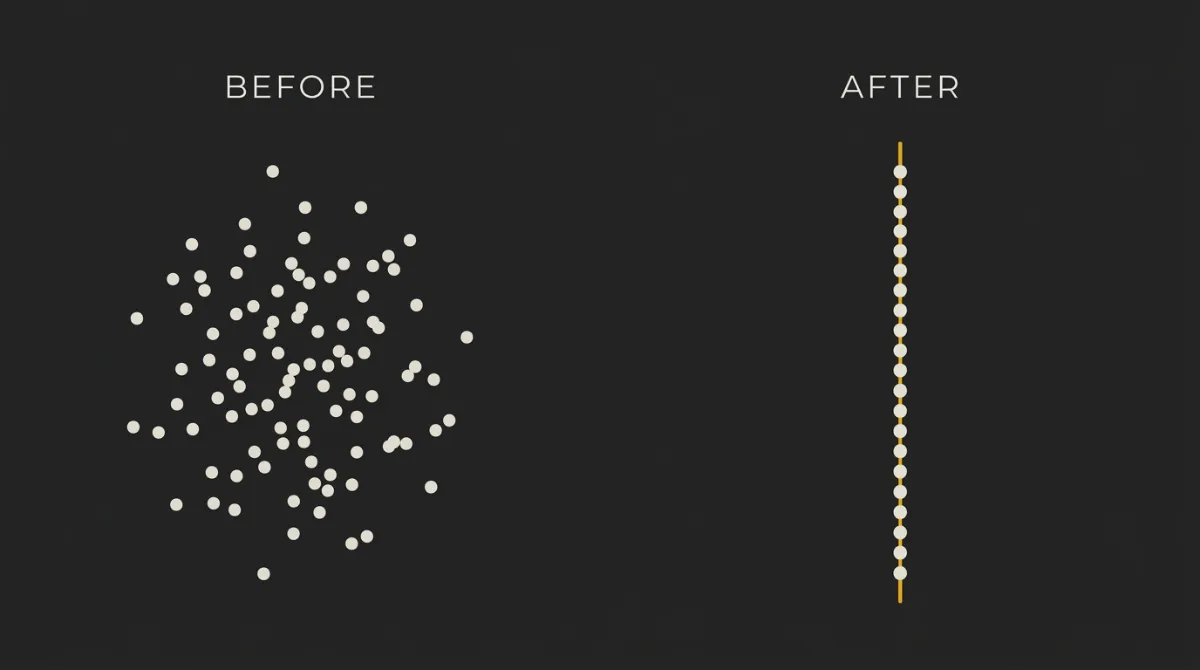
Email pays when it becomes a system instead of a chore. Start with the parts that remove friction, fix trust and make the next send more likely to happen.
-
Audit your welcome flow this week: does it exist, does it end too early and does the template look like every other small business?
-
Check your sender authentication: SPF, DKIM and DMARC. Your ESP’s help docs will usually walk you through the setup.
-
Generate one branded template you can actually be proud of, then use it for your next send.
Frequently Asked Questions
How often should a solopreneur email their list?
Weekly is the sweet spot for most solopreneurs. Bi-weekly is usually the floor, and monthly often lets the list go cold.
The main goal is consistency. A regular rhythm keeps your name familiar so the next offer does not feel random.
What’s a realistic open rate for a solo operator?
A healthy range for many solo lists is roughly 30% to 45%. If you are below 25%, the usual problems are weak subject lines, inconsistent cadence or a tired list.
Open rate is not the only metric, but it is a useful first signal. If it drops hard, check the basics before rewriting everything.
Do I need a separate domain for sending?
Yes, you should send from a custom domain, not Gmail. It improves trust with readers and gives you a stronger deliverability foundation.
For most solo operators, that means sending from an address like name@yourdomain.com. It looks more credible and works better with authentication records.
Is email marketing still worth it in 2026?
Yes, email is still worth it in 2026. You own the audience, the channel compounds over time and it remains one of the clearest ways to turn attention into revenue.
The channel has not stopped working. What changed is that weak templates and lazy sends stand out faster than they used to.
What’s the cheapest way to start email marketing as a solopreneur?
The cheapest way to start is usually a free tier from an ESP that fits your model. Kit, MailerLite and Brevo all offer entry points that can get a solo operator sending without upfront software cost.
That is enough to start building the habit and the system. The expensive mistake is waiting until everything feels perfect before you begin.
How big does my list need to be before email pays?
Your list does not need to be huge before email starts paying. A 500-person engaged list can outperform a 5,000-person cold list.
Engagement beats size. If people open, click and trust what you send, the list can earn its keep much earlier than most solopreneurs expect.