Arrow-links, not button soup
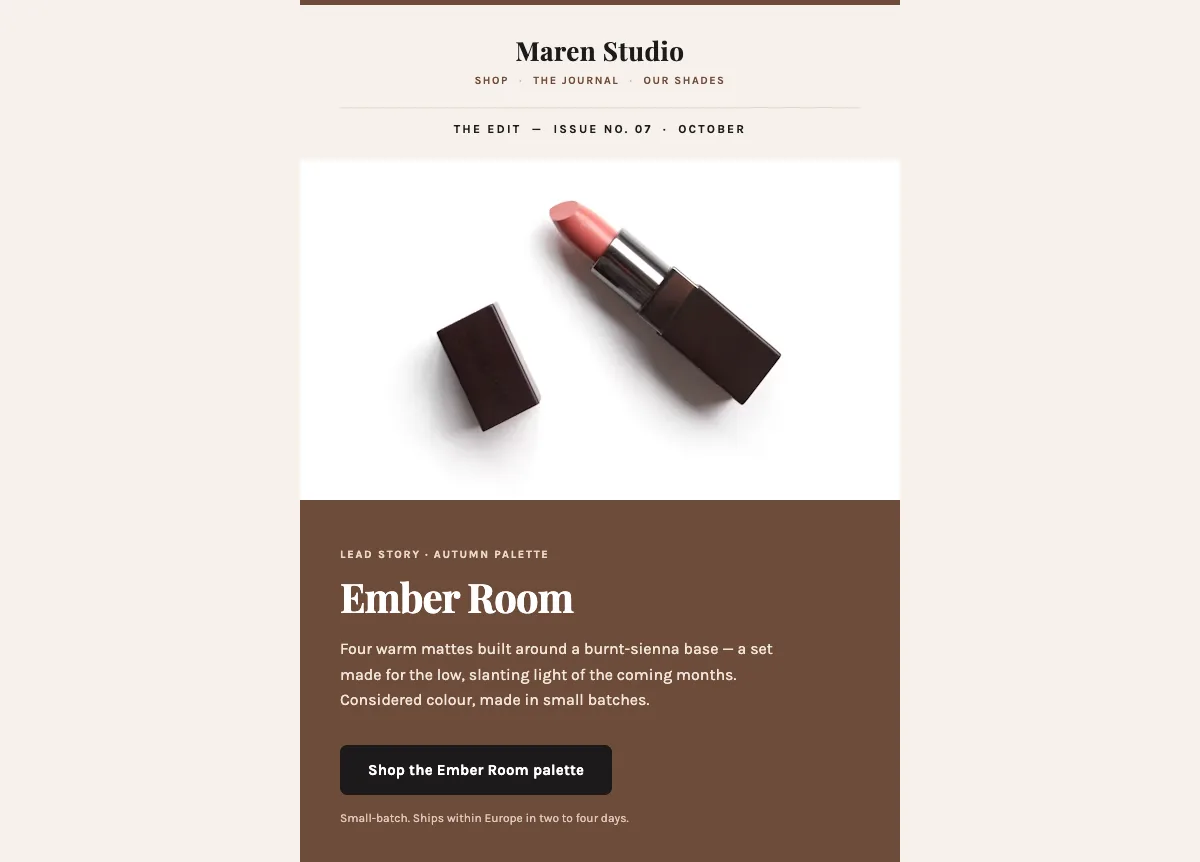
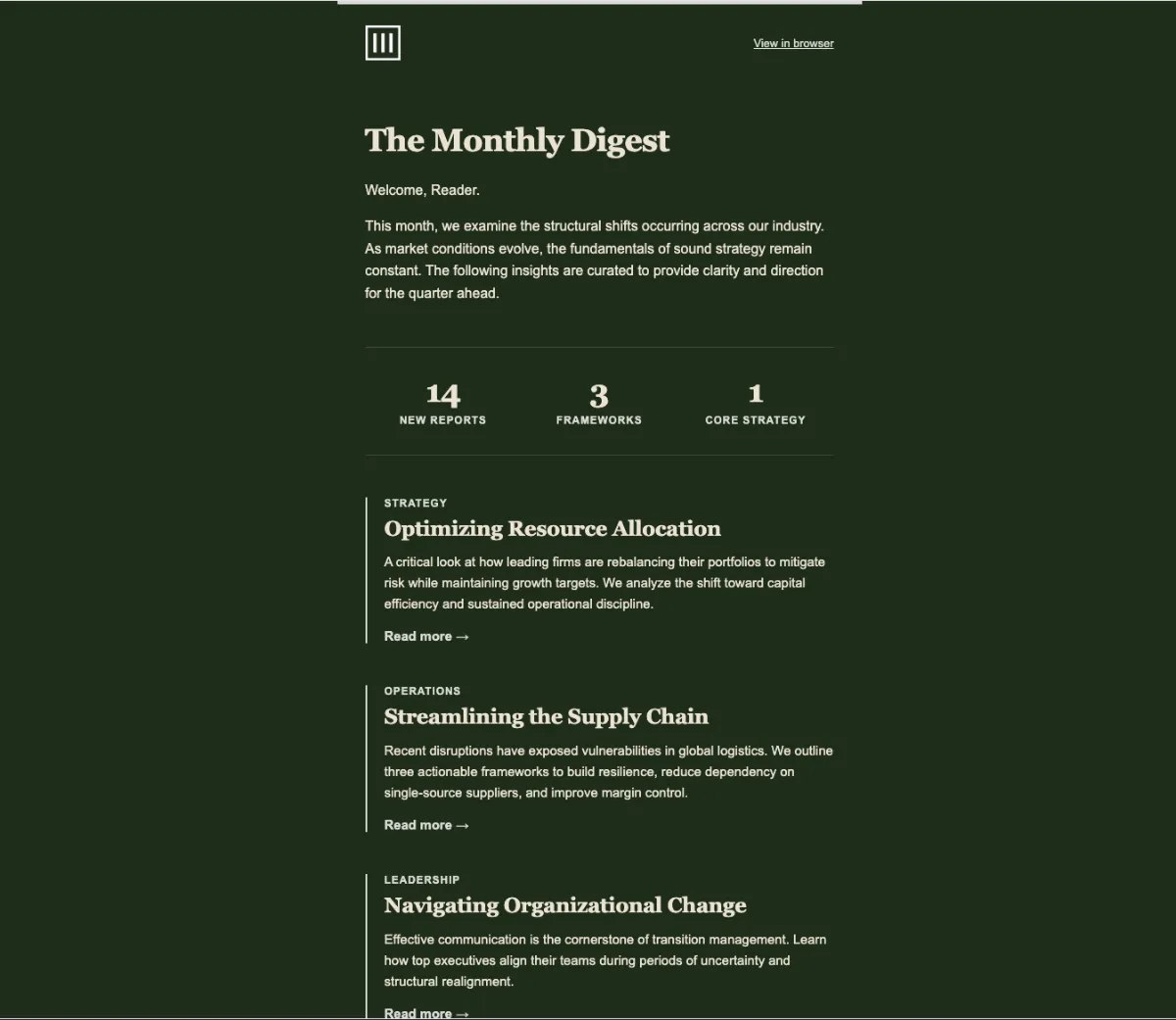
Each editorial card ends in a "Read more →" link rather than its own button. Button soup is the named failure mode of the newsletter archetype — five buttons and the reader picks none.
Preview
What's inside
Read off the file itself, not a spec sheet. This is the module order the download actually ships with, in the order a reader meets them.
Import
The download is a single HTML file. Here is where it goes in MailerLite, what the platform expects, and which tags are already wired up.
Plan The Custom HTML editor is an Advanced-plan feature. Lower MailerLite tiers do not expose it.
Editing MailerLite’s Custom HTML editor treats the whole document as raw HTML — there are no editable-region or repeatable-block markers, so edits happen in the code. Merge tags are the only dynamic substitution.
Watch for MailerLite requires a visible unsubscribe link and a physical mailing address in the footer. The template ships with {$unsubscribe} in place — swap the placeholder address for yours before the first send.
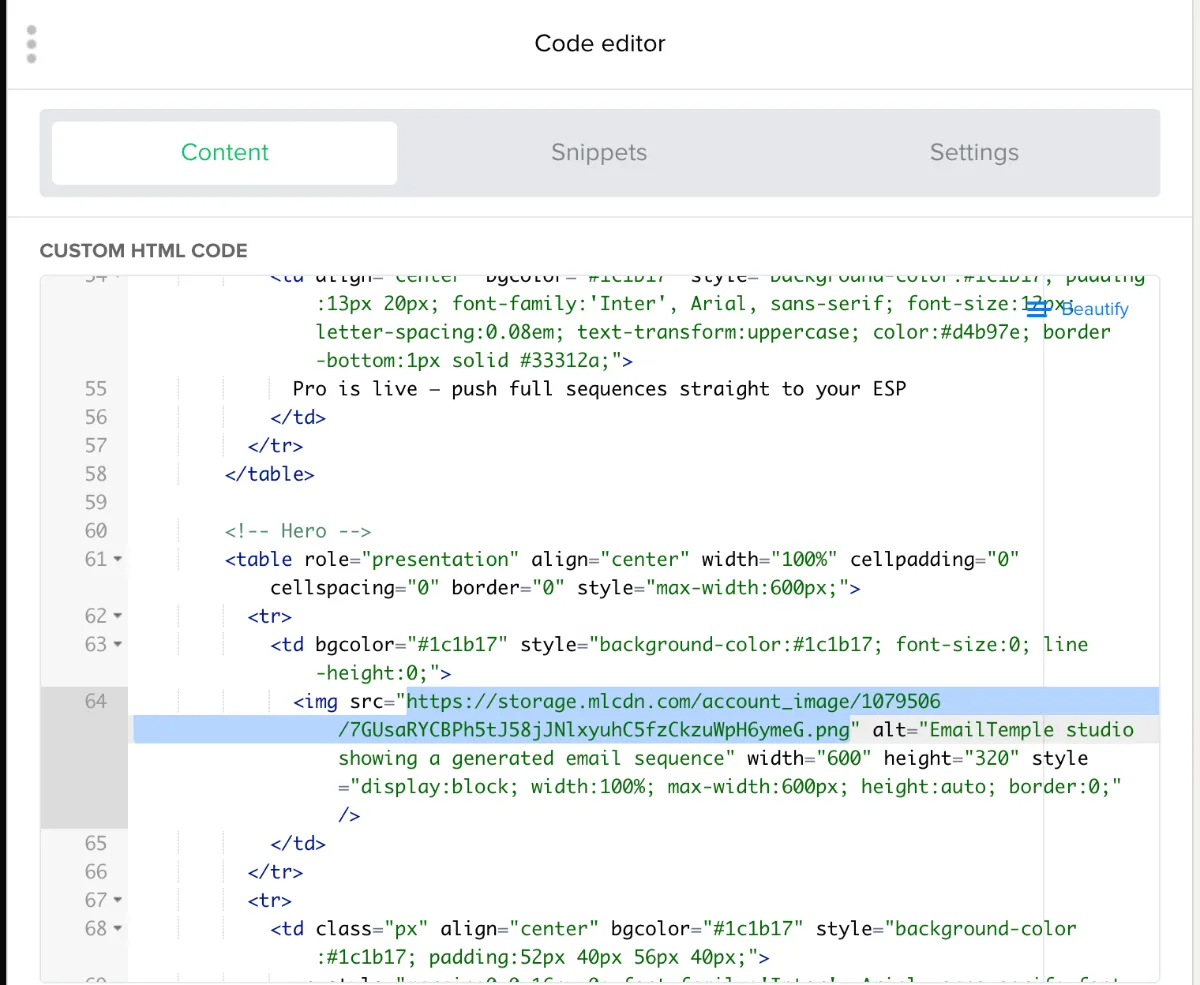
Two routes. In the campaign editor you can usually click an image and swap it straight from the file manager, no code involved. If that option is not offered, open the code editor — clicking an image selects its block, and you replace the src with a URL from your MailerLite file manager, which start with storage.mlcdn.com.
How to use it
Send it as a campaign on the same date every month, whether that is the first Tuesday or the last working day. The date matters more than the hour, because a digest earns its readership by arriving when the month closes and not at random. Judge each issue on click rate in your MailerLite reports rather than open rate, since Apple Mail Privacy Protection inflates opens across every list.
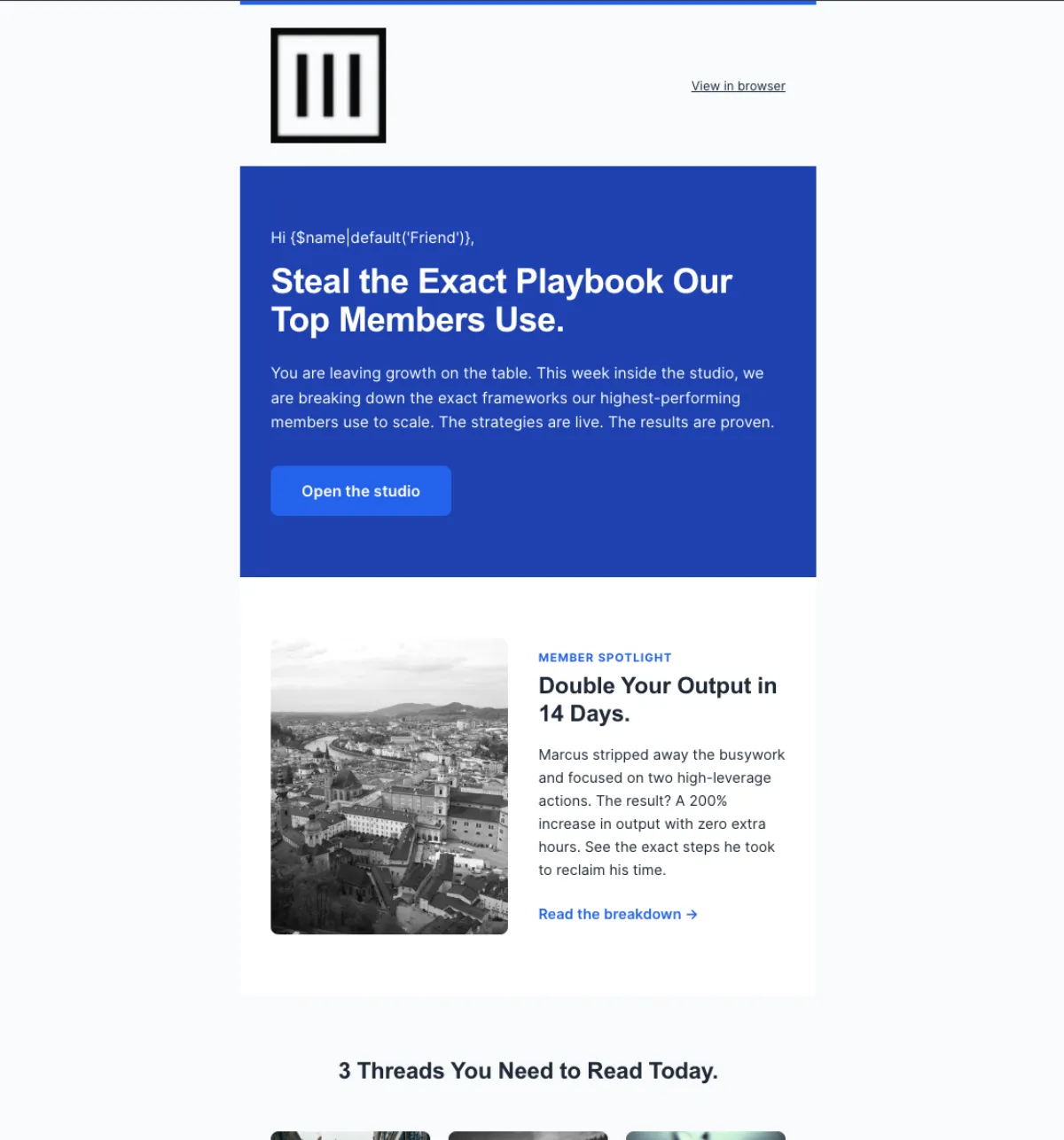
This layout holds no photography. The 40px masthead mark is the only image in the file, so the three story cards carry on type alone. Start with the stat bar — 14 new reports, 3 frameworks, 1 core strategy — then the category labels above each card: Strategy, Operations and Leadership. MailerLite’s custom HTML editor has no editable-region markers, so the practical move each month is to duplicate last issue’s campaign and edit those numbers in the code. The standing “The Strategy Playbook” block and the example New York footer address go last.
The craft
Each editorial card ends in a "Read more →" link rather than its own button. Button soup is the named failure mode of the newsletter archetype — five buttons and the reader picks none.
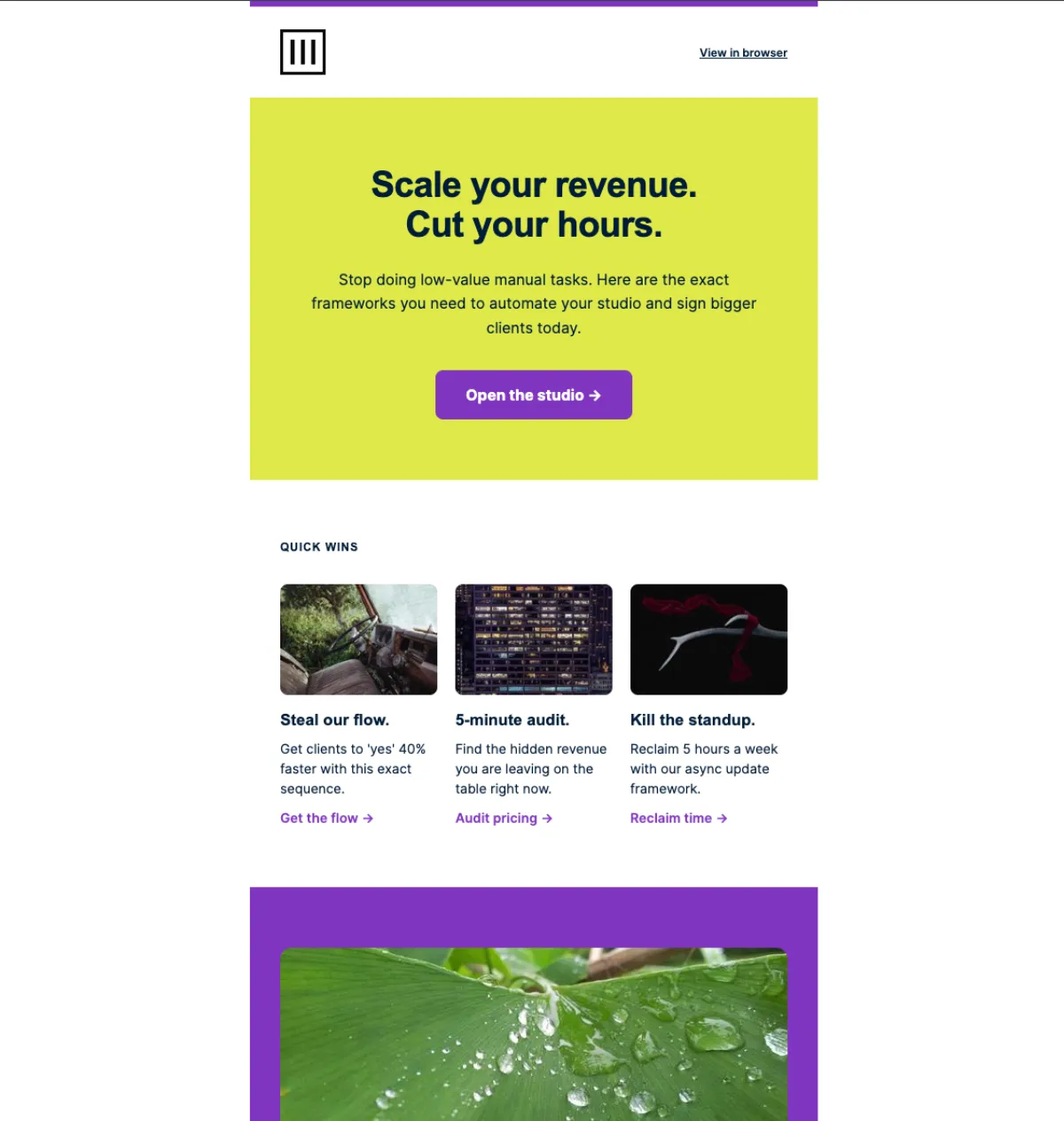
One reading path, scannable blocks, alternating image-left and image-right between consecutive cards so the eye keeps moving without the layout repeating itself.
A fixed section order and a consistent send time turn a newsletter into something a reader can locate instantly, issue after issue. Morning Brew built a daily habit on exactly that predictability.
Or refine this
Generate your own with this template as a starting point. Change the colors, the voice, the offer — describe what you want different and the studio recomposes it. Apply your brand kit and ship in your tone, not the template's.
The download is yours either way.
Open this template in the studio →
Questions
Advanced. The Custom HTML editor is not exposed on MailerLite’s free or Growing Business tiers, so the paste-in path is only available once you are on Advanced.
No. This template ships with its CSS already inlined, which is what Gmail’s webmail client needs anyway — it strips style blocks in several contexts, so inline styles are the only reliable carrier.
Consistency beats any theoretical best hour. Pick a slot your audience already reads in, then hold it — the predictability is the point. Read your ESP reports to find it, and judge by clicks rather than opens, because Apple Mail Privacy Protection inflates open rates industry-wide.
Backgrounds are set with inline styles rather than the belt-and-braces bgcolor pairing, so check the render in a dark-mode client before your first send.
There is no VML fallback on the buttons, so Outlook on Windows will render them as styled text rather than a filled shape.
The layout is a 600px table backbone with a mobile breakpoint, and the CSS is already inlined for the clients that strip style blocks.
In the studio
Describe what you want to send. Get a high-converting, dark-mode-safe template in seconds. Free tier, three generations a month, no card required.